Georg Lentze: Physics and More
| Home | Physics | Photos | Pictures | Writings | More |

At school I was told that the speed of light is the same for every observer. I was intrigued by this claim, which appeared to be obviously false.
When I move towards or away from a beam of light, the relative speed between me and that beam cannot be the same as when I'm stationary relative to that same beam, I protested.
Not so, said my teachers. They and my textbooks assured me that the constancy of the speed of light was an empirical fact, confirmed by the famous Michelson-Morley experiment.
I remained unconvinced: The experiment appeared to suggest that there is no stationary, all-pervasive medium in which light propagates, as some 19th-century physicists had thought. But what did that have to do with the speed-of-light claim?
I went on to study physics at university to clear the matter up, but to no avail. My lecturers once again wheeled out Michelson-Morley as proof of the light-speed principle and refused to engage in any meaningful debate. So I gave up.
The principle of relativity and the constancy of the speed of light "are sufficient to arrive at a simple and consistent electrodynamics of moving bodies on the basis of Maxwell's theory for bodies at rest." Albert Einstein
But my questions didn't go away. So, years later, I decided to settle the issue of whether or why the light-speed claim was justified once and for all.
My journey is chronicled in my relativity blog, in which I discuss the writings of key authors on the light-speed principle, from Albert Einstein to Kevin Brown. I have arrived at some astonishing conclusions.
My key finding is that the constancy of the one-way speed of light is not a law of nature but the result of a decision to adjust clocks in a manner which makes that speed the same in all directions for all inertial observers.
In general, this clock adjustment procedure does not synchronize clocks, so the times and speeds to which it gives rise are purely mathematical coordinate times and speeds.
The failure of many physicists to realize that, in general, special relativity's clock adjustment procedure is not a synchronization procedure has led them to draw spectacular but misguided conclusions on causality and simultaneous existence.
Indeed, much of the strangeness of special relativity does not correspond to anything in the observed phenomena but is purely the result of a clock adjustment procedure which is not a synchronization procedure.
It is possible to adjust clocks such that the one-way speed of light is not the same for every observer. However, in practice it is difficult or impossible to adjust clocks in a manner which guarantees synchronization for all inertial observers.
Einstein's clock adjustment procedure may therefore be justified on pragmatic grounds, as long as it is made clear that in general it is not a synchronization procedure.
"The time coordinate t can be chosen so that the mathematical expression of the physical laws reflects their inherent symmetries." Wolfgang Rindler
These conclusions follow pretty directly from some of the writings of the best specialists on special relativity - starting with Einstein, who wrote in his famous 1905 article On the Electrodynamics of Moving Bodies that his aim was "to arrive at a simple and consistent electrodynamics of moving bodies on the basis of Maxwell's theory for bodies at rest" (p. 892).
In Maxwell's theory, light travels at c in all directions, and generalizing this theory to all frames of reference therefore requires a clock adjustment procedure which ensures that the speed of light is always identical in opposite directions.
Or consider this quote from Wolfgang Rindler's Relativity - Special, General, and Cosmological (2001): "In particular," Rindler says, "the time coordinate t can be chosen so that the mathematical expression of the physical laws reflects their inherent symmetries."
Rindler makes three important points in this key sentence: first, as far as physicists are concerned, time coordinates are a matter of choice; second, that choice should be guided by the effect it has on the mathematical form of physical laws, in other words: whether or not such time coordinates define a relationship of simultaneity is quite irrelevant; third, the desired effect is for the "inherent symmetries" of physical laws to be preserved.
The two-way or round-trip speed of light needs to be distinguished from the one-way speed. Its constancy for all inertial observers is a matter of empirical fact as long as clocks of identical construction are used.
The constancy of the two-way speed can be interpreted as a consequence of the more fundamental empirical fact that objects moving through an inertial frame of reference in which light propagates in symmetrical conditions and clocks have been synchronized using Einstein's method are shortened by the relativistic factor, and clocks moving through such a system run slow by the relativistic factor.
If the relativistic length contraction and time dilation factors can be explained simply, for example on the basis of a simple model of electricity, then that would also furnish a simple explanation for the constancy of the two-way speed of light.
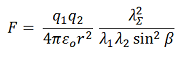
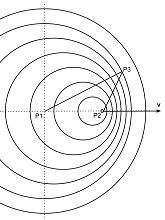
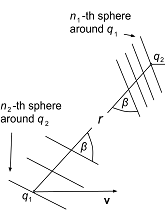
The latest is that I have developed a model that delivers a partial explanation, one that satisfies my curiosity even though no doubt deeper explanations can be found. My findings are set out in an article published by the journal Physics Essays (copyright: Physics Essays Publication) in July 2018:
A new model to explain the forces between moving charges (PDF)
Some of the more technical aspects of the 'sphere model' developed in the article are presented here:
Sphere model calculations (PDF)
For more details, please read my blog post on the publication of the sphere model article.
I explain my motivation for developing the sphere model in an article entitled 'Dialogue concerning magnetic forces' published by the journal Studies in History and Philosophy of Modern Physics (PDF of accepted manuscript).
For readers who have not been following the progress of my blog, it would be best to read it from the start rather than in the reverse order in which it is presented.
That is why I have listed all my blog entries to date in chronological order below, starting with the oldest:
And that concludes my Physics page. Back to top